





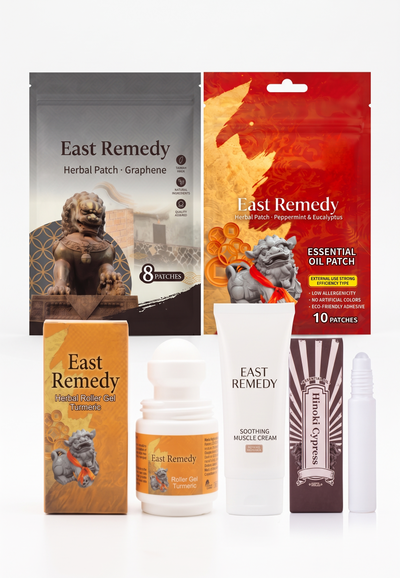

How patches and roller gels compare
A simple look at the formats, based on typical products in each group. Always read the label and follow the directions on the pack.
Looking for scent-led relief? See our Essential Oil Rollerballs.
| Herbal patch | Herbal roller gel | Oral tablets & capsules | Pharmacy medicated creams & patches | |
|---|---|---|---|---|
| No pills to swallow | ||||
| Goes exactly where you want it | ||||
| Formula | Herbal, drug free | Herbal, drug free | Varies by product | Usually medicinal actives |
| How you use it | 4 to 8 hours per patch | Glide on as needed | As directed on pack | As directed on pack |
| Cost per use | $2.80 to $3.74 per patch (worn 4 to 8 hours) | $0.59 per use, based on 3 uses a day for about 14 days | Varies by product | Varies by product |
| Warming and cooling options | Yes | Yes | No | Varies |
Frequently Asked Questions
Apply the patch to clean, dry, and hair-free skin. Press firmly for a few seconds to ensure good adhesion. For the best experience, avoid applying it to damp or freshly moisturised skin.
Wear a patch for 4 to 8 hours, see individual patch product recommendation.
Hold the rollerball against clean, dry skin and glide it over the area, with a light massage if you like. Use through the day as needed. Follow the directions and warnings on your pack.
A patch stays on the skin for 4 to 8 hours, while a roller gel glides on whenever you like. Both come in cooling and warming options. Our cooling vs warming guide compares them side by side.
For the best adhesion, apply the patch to clean, hair-free areas such as the upper arm, shoulder, shoulder blade, or lower leg. Rotate the application site regularly for comfort.
Our patches and roller gels are designed to be gentle on the skin. If you have particularly sensitive skin, we recommend testing a small area first. If irritation occurs, discontinue use.
Yes. When applied correctly to clean, dry skin, the patch is designed to stay in place during normal daily activities. Excessive moisture or oils may reduce adhesion.

Hero Ingredients
Yi Tiao Gen
ORIGIN A root native to the Kinmen islands, in the Taiwan Strait. Wild-harvested rather than farmed at scale.
HERITAGE Local record traces its use back to the Koxinga era in the 1660s, when soldiers stationed on Kinmen are said to have first turned to the root for relief. It has remained a staple of herbal practice for hundreds of years.
HARVEST Gathered wild in limited seasonal quantity, with roots typically harvested after three years of growth, in autumn and winter.